
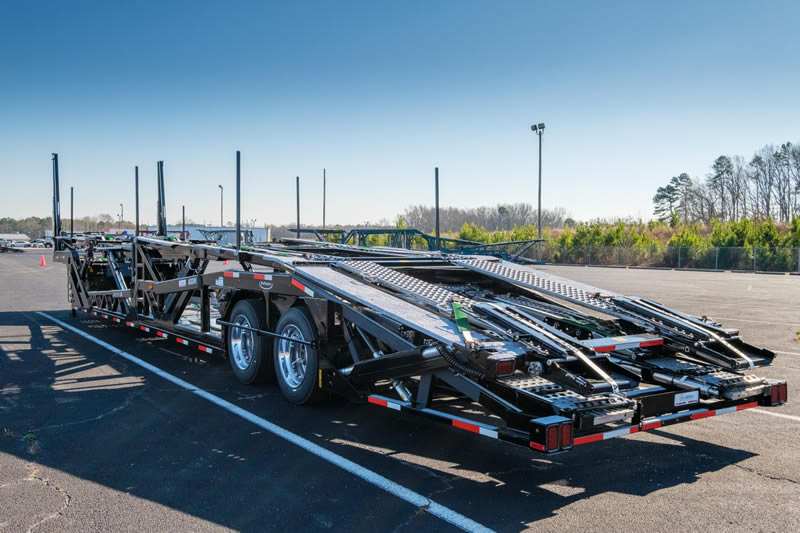
In the demanding world of auto transport, cargo securement is not a detail, it is the foundation of safe, compliant hauling. Every mile on the road, your reputation, your equipment, and thousands of dollars in inventory depend on the quality of your securement and how it is applied.
At CD Jabbco Parts, we understand that a strap is never “just a strap.” It is a critical link in your safety chain. This guide explains the differences between common vehicle securement methods, clarifies the regulatory math behind Working Load Limit (WLL), and outlines proven techniques that help professional car haulers protect their cargo, and their DOT record.
The Regulatory Imperative: Why WLL Is a Rule, Not a Suggestion
Vehicle securement is governed in the United States by the Federal Motor Carrier Safety Administration (FMCSA) under 49 CFR Part 393, and in Canada by provincial regulations based on National Safety Code (NSC) Standard 10 – Cargo Securement. For professional car haulers, these rules are not optional, they are enforceable safety requirements.
The most critical concept in compliance is Working Load Limit (WLL).
What Is Working Load Limit (WLL)?
The Working Load Limit is the maximum load that a tie-down component, such as a strap, chain, binder, or anchor point, is rated to handle during normal service.
Under FMCSA §393.106(d):
-
The aggregate WLL of the tie-downs restraining the vehicle must be at least 50% of the weight of the vehicle being transported.
Example:
If you are hauling a 6,000-lb SUV, the combined WLL of the tie-downs restraining that vehicle must be at least 3,000 lb.
In addition, FMCSA §393.128(a)(1) requires that:
-
All vehicles must be secured at a minimum of four tie-down points, regardless of vehicle weight.
Using securement components with clearly marked WLL ratings, and ensuring the total WLL requirement is met, is a non-negotiable part of legal risk management.
Strap Showdown: Matching the Securement to the Vehicle
The correct securement method depends entirely on the type of vehicle being transported. Using the wrong strap can result in failure, cosmetic damage, or structural harm to the vehicle.
1. The Workhorse: Axle and Wheel Straps
Best for:
Standard passenger cars, SUVs, and light-duty trucks.
Axle and wheel straps are the most commonly used securement devices in auto transport. They secure the vehicle by anchoring to approved axle, frame, or wheel locations and are tensioned using ratchets.
Best practices:
-
Inspect axle and suspension areas for sharp edges before securing
-
Route straps away from brake lines, air lines, and moving suspension components
-
Use edge protectors where contact may occur
2. The High-Value Choice: Basket / Through-the-Wheel Straps
Best for:
High-end sports cars, low-profile vehicles, classic cars, and vehicles with custom wheels.
Basket straps cradle the tire rather than contacting suspension or body components. This method is preferred when:
-
Minimizing contact is critical – Reduces the risk of damaging painted or polished components
-
Ground clearance is limited – Ideal for low-slung or performance vehicles where axle securement is impractical
For operators who routinely transport specialty or exotic vehicles, high-quality basket straps are essential for protecting both the vehicle and liability exposure.
3. The Heavy-Duty Requirement: Chains and Binders
Best for:
Heavy construction equipment, heavy-duty truck chassis, and specialized commercial vehicles.
While chains and binders are not typically used for passenger vehicles, they offer the highest WLL ratings and are required for extremely heavy loads. When used, chains must meet applicable transport grades (commonly Grade 70 or higher) and be protected from contacting painted or finished surfaces.
WLL and the Failure Factor: Never Use a Compromised Component
A securement system is only as strong as its weakest component. A strap may have a 10,000-lb breaking strength when new, but breaking strength is not WLL, and damage eliminates a component’s legal rating.
From an enforcement standpoint, a damaged strap is considered non-rated and should be removed from service immediately.
Golden Rules of Strap Inspection (FMCSA §393.104)
-
Cuts, tears, or holes: Any significant webbing damage requires retirement
-
UV degradation: Faded colour, stiffness, or brittleness indicates reduced strength
-
Hardware condition: Bent hooks, rusted fittings, or faulty ratchets invalidate the securement
Ignoring inspection standards is a safety risk and a financial gamble. Cargo securement violations can result in out-of-service orders, multiple citations, and thousands of dollars in combined fines and downtime.
Securement Technique: The Art of the Proper Load
Even the best equipment cannot compensate for poor technique. Proper securement ensures compliance and minimizes vehicle movement under braking, acceleration, and cornering.
Three Core Rules of Proper Vehicle Securement
-
Angle and Direction
Tie-downs should pull downward and forward or downward and rearward, resisting movement in all directions. Industry best practice places tie-down angles approximately 30°–60° from horizontal. Avoid pulling straight down, which allows excessive lateral movement. -
Tension and Re-Inspection
Secure the vehicle, confirm tension, and re-check all tie-downs after the first 50 miles, as required by FMCSA §392.9(b). Loads settle, and suspension compression can loosen straps. -
Never Use Non-Structural Anchor Points
Never secure a vehicle by wrapping straps or chains through windows, around steering wheels, or over non-structural body components. Always use axles, frames, wheels, or manufacturer-designated tie-down points, as outlined in FMCSA §393.128.
Conclusion: Quality Securement Protects Your Reputation
In the high-stakes world of auto transport, compromise is not an option. Shippers and manufacturers expect vehicles to arrive in the exact condition they were picked up, and regulators expect full compliance with cargo securement standards.
Investing in the right straps, chains, and inspection discipline is not an expense. It is an investment in safety, compliance, and long-term profitability.
At CD Jabbco Parts, we supply professional-grade cargo securement solutions engineered for real-world hauling conditions. From wheel straps to chains and binders, our inventory is built to help you haul with confidence, and stay compliant every mile of the way.